Sunday, 4 December 2016

Will Trump go to Mars? Nasa’s nervous wait


In Nasa language it’s called a pivot. It’s a policy change, a U-turn or a departure from a goal set by the previous US president. Until the election of Donald Trump, space insiders and even Nasa itself had a pretty good idea what, under a Hillary Clinton presidency, that pivot was going to be. It wasn’t going to be popular but it was necessary.
People had been whispering it for more than a year. Even as the Nasa PR machine talked endlessly about “the journey to Mars”, those in the know understood that it was little more than a pipe dream. Following the election, a “transition team” would be sent to take stock at Nasa, and the agency’s goals would gradually pivot away from Mars and to the moon.
Returning astronauts to the moon with the cooperation of other space agencies around the world was achievable and there was a definite appetite for it. The European Space Agency and Russia were both interested in taking part and the International Space Station was seen as the blueprint for the kind of multinational cooperation that could make it happen. In essence, it was what both Hilary Clinton’s Democrats and Washington Republicans were looking to make happen.
The space policies were not very different. People would joke that you could take an editorial by a Republican space person, change a couple of words here and there and then put Clinton’s name on it. We were all assuming that Clinton would win. I knew who the people were that would show up at Nasa the next day to begin the transition process,” says Keith Cowing, a former Nasa employee who now edits Nasawatch.com.
Then, of course, Trump won. At first it seemed no big deal, but then surprising events started to unfold. A day or two after the election, none of the expected Republican advisers were named as part of the Trump transition team for space. “They were either thrown off because they were lobbyists or had decided that they did not want to be involved,” says Cowing, who has been reporting on Nasafrom Washington DC for 20 years. “Suddenly it went from what seemed to be clarity to complete mystery.”
This week, however, some clarity finally emerged. Christopher Shank, who held senior policy jobs at Nasa and sat on Congress’s House Science Committee, will lead the transition team. One of the first things he is going to have to look at is the rocket that Nasa are building to supposedly take astronauts to Mars: the Space Launch System (SLS).
SLS is controversial because it is so expensive. It is part of a multi-billion-dollar-per-year programme that will only fly four times between 2018 and 2026. In many ways it is Nasa’s flagship programme, but it is sucking a huge amount of money out of the agency’s budget on the what-if scenario of human Mars missions.
It is also looking egregiously expensive when compared with the progress being made at private companies, such as Elon Musk’s SpaceX, which is developing a large rocket of its own, the Falcon Heavy.
Lori Garver, who was part of Barack Obama’s transition team in 2008 and went on to become Nasa deputy administrator from 2009 to 2013, says that the single best thing the Trump administration can do for Nasa is cancel SLS.
“Nasa should invest more in the technologies that are too advanced for the private sector, and the technologies that are of real benefit to society,” says Garver. “There is too much of a disconnect from the benefits to the people who have funded the organisation.”
She says that the agency has become insular. “Astronauts want to go to Mars or the moon or wherever. But why do they want to go there? We went to the moon in the 1960s to beat the Russians and advance technology in the cold war and be world leaders. But what’s our reason now?”
Beating the Chinese perhaps? They have been making huge advances in space and it is clear that landing their own astronauts on the moon is on the horizon.
Garver is dismissive of that kind of thinking: “Playing out a back-to-the‑moon scenario with China is tough because we’ve already been. Six times. Do we really want to put in a bunch of resources to say we went a seventh time?”
Yet the prospect of reviving the glory days of the Apollo moon landings plays nicely into the Trump rhetoric of making America great again.
“My biggest concern with Trump is that he keeps saying our space programme is worthy of a third-world nation. What is he even talking about? We have the best space programme on the planet. It is the envy of the world. I think his transition team is going to find that Nasa is in good shape, and just a few corrections could make it even better,” says Garver.
A clear concern is that Trump intends to slash the climate change budget. The fear comes primarily from an op-ed published on spacenews.com on 19 October written by Robert Walker and Peter Navarro, who at the time were senior advisers to the Trump campaign.
They wrote: “Nasa’s core missions must be exploration and science – and inspirational! These are the fundamental underpinnings of a Trump civilian space programme. Nasa should be focused primarily on deep-space activities rather than Earth-centric work that is better handled by other agencies.”
Trump is well known as a climate-change denier. He infamously tweeted that global warming was a conspiracy theory of the Chinese to damage US manufacturing. This has panicked some. Speaking to the Guardian, Kevin Trenberth, senior scientist at the US National Center for Atmospheric Research, said that eliminating Earth science at Nasa “Could put us back into the ‘dark ages’ of almost the pre-satellite era.” He added, “Space research is a luxury, Earth observations are essential.”
Walker has suggested that some Earth observation missions could be placed under the jurisdiction of other US agencies such as the National Oceanic and Atmospheric Administration (Noaa). According to Garver though, Noaa simply does not have the capability to take over developing these hi-tech missions. She says that those saying they do are simply uninformed, but they have the ear of the president.
“I think you could have a fairly rash decision to cut Nasa’s budget for this, to not increase Noaa’s and so lose the capability to advance the technology necessary to do this,” says Garver.
“Donald Trump has pledged to ‘drain the swamp’ in his first 100 days. But Nasa has no idea whether they are part of this 100 days or not. They do not know what the budget is going to be, whether Earth science is being carved out of Nasa or the journey to Mars is being cancelled. They are just sitting there waiting to be told, and this may go on for months,” says Cowing.
The general lack of clarity currently emanating from the Trump camp is not helping anyone, and that includes Nasa’s international partners. With the worst timing possible, the European Space Agency held a long-scheduled ministerial meeting this week to discuss its space programme for the coming years. But not knowing what Nasa’s priorities are makes life very difficult.
“The global spaceflight community, rightly or wrongly, does look to the United States for leadership in civilian space activity,” says David Baker, the editor of Spaceflight magazine. As an engineer, Baker worked for Nasa on the Apollo programme.
ESA is currently in the plum role of building a large part of the spacecraft for Nasa’s new human capsule, known as Orion. This makes ESA a crucial partner in any return to the moon or eventual mission to Mars. Yet stories abound of how American manufacturers are keen to see those lucrative contracts returned to US soil. And Donald Trump may have a very sympathetic ear.
It’s not just a wall around Mexico that Trump is thinking about, it’s a wall around the continental United States,” says Baker.
To protect itself from the current vagaries of Nasa, Baker thinks ESA should look eastwards: “I’m a great believer that ESA should be moving towards Russia, and I’m also a great believer that we should be moving much closer to China. With those associations, I don’t think there is necessarily going to be the same driven urgency to get with Nasa to do the big bold things that Europe wants to do.”
We all know that the Trump presidency is going to be felt around the planet. Now it seems that the repercussions will also extend into space.


Thursday, 1 December 2016

After Trump election, battle continues over MassGOP chair

BOSTON — As the fallout over Donald Trump's stunning victory last month continues, MassGOP chair Kirsten Hughes is facing a challenge from anti-tax activist Steve Aylward, who is seeking to ride the wave of grassroots support for Trump in Massachusetts in next month's party election.
A fight over the party's top spot could become a test of the establishment's hold over the state party — Gov. Charlie Baker has endorsed Hughes, but in an echo of the Trump insurgency, Aylward, who went public with his candidacy in October, says he has the support of grassroots activists. He won the endorsement of the Boylston Republican Town Committee last week.
Aylward challenged Hughes to a debate last weekend, but Hughes has not responded, telling POLITICO Massachusetts on Wednesday that Aylward “said he was going to run before and he hasn’t pulled the trigger. I want to wait and see if he’s actually running.”
Aylward said this is the first time he made a “formal commitment” to run for the chairmanship, doing so by sending an email to state committee members announcing his intentions. He does not have an online presence for his campaign.
Aylward said that more than 20 Republican town committees have backed him.
"She should debate. She owes all Republicans in the state a debate," he said.
Hughes announced last month that she had essentially locked up another term as party chair with 42 pledged votes from state committee members. Forty-one votes from the state committee's 80 members are needed to win.
But Aylward is skeptical of Hughes' claim.
“I think a lot of those votes are weak,” Aylward said. “I don’t do business the same way. I don’t think it’s good practice to ask people to commit to you before they’ve heard debates.”
A date for the party chair election hasn’t yet been set, but will likely take place in late January, according to the party.
Aylward, a conservative activist who helped lead a successful gas tax repeal ballot measure in 2014, portrays his candidacy as a microcosm of the split in the national GOP.
“The fight on the state committee is people who want to reform the party against the establishment,” Aylward said. “I’m glad Trump brought it to light.”
Baker caught heat earlier this year after publicly backing moderate candidates for the state committee and subsequently pushing out more conservative members. Those moderate members then helped a Baker-backed candidate for national committee woman, Keiko Orrall, oust conservative-aligned incumbent Chanel Prunier in April.
Aylward blames the state party for not doing more for the Trump campaign during the general election, which Hughes refutes. Trump received just over 1 million votes on Election Day in Massachusetts while Hillary Clinton received just shy of 2 million.
“Leadership at MassGOP didn’t get behind Donald Trump,” Aylward said. “I think the results of the election were disappointing and they continue to be disappointing. While the rest of the country advances, in terms of the party, we did nothing more than hold the line.”
Hughes insists that the party was behind the national ticket. “We had field offices open where we made calls," Hughes said. "We always, in our scripts, mentioned Trump. Massachusetts isn’t exactly a battleground state for the presidential contest. But that doesn’t mean that we didn’t support the ticket." Hughes added that she voted for Trump.
Aylward’s assertion that last month's election was a disappointment doesn’t quite gel with the state party’s current narrative. Republicans on Beacon Hill fended off all of their challengers and added one seat in the House thanks to Will Crocker's victory on Cape Cod — the party’s best showing in a presidential election year in 30 years, Hughes said in a post-election email blast.
That said, GOP-backed ballot questions to lift the state’s cap on charter schools and opposition to marijuana legalization both failed.
“They stood behind two ballot questions that would have been very good for Republicans and both went down in defeat,” Aylward said.
While Aylward had harsh words for Hughes and party leadership, he praised Baker, who was one of Trump’s biggest detractors in the state party. “His best chances for re-election are if I am the chairman,” he said of Baker, who has not announced whether he will seek re-election in 2018. “A lot of Republicans need to be brought back home and I can do that better than Kirsten Hughes.”
Hughes disagrees with Aylward’s assessment of the party.
“We were able, since I’ve joined the party, to add 15 freshmen in the Legislature, we’ve gained nine seats, and we’ve had our most successful presidential election year in over 30 years,” said Hughes, who has held the chairmanship since early 2013. “I feel we’re on a good path and I’m looking forward to keep forging the road ahead.”

Your Road Map To Paul Ryan's Plan To Privatize Medicare

Ryan's 2008 Plan On Medicare: Ending Medicare In 2008 when he was the ranking member of the House Budget Committee, Ryan proposed that traditional Medicare should be replaced with a voucher program. The idea was that individuals would get a set amount of money from the government to purchase health insurance and eventually Medicare would be phased out.
The plan wasn't well received by Ryan's colleagues even as conservative think tanks embraced it. Many viewed it as too radical, and touching a program as beloved as Medicare – not to mention phasing it out– was politically a major gamble. According to that New Yorker profile from 2012,Ryan got just 8 co-sponsors on the legislation at the time.
Ryan's plan eventually gave recipients of Medicare a stipend of "up to $9,500– adjusted for inflation and based on income" to purchase health insurance. Ryan argued that "low-income individuals" would receive "greater support" and that "those with greater medical needs" would "receive a higher payment" but how that would be determined and the specific distinctions were left blurry. As a result, many worried that it put an undue burden on the sickest and oldest beneficiaries and that the vouchers wouldn't keep up with the rising cost of medical care.
Ryan's early plan tied the increase each year to combination of inflation as measured in the Consumer Price Index and medical inflation. It also raised the Medicare eligibility age over time from 65 to 67.
Ryan and Rivlin Take On Medicare In 2010
Ryan worked on a more moderate plan in 2010 with Democrat Alice Rivlin, who had been the director of the Office of Management and Budget under President Bill Clinton. The plan differed from Ryan's earlier plan in one very significant way. The elderly still received subsidies to buy health insurance, but the rate at which their subsidies increased was more generous, an attempt to limit the government's exposure while still accounting for rising health care costs. It was unclear if that plan phased out traditional Medicare or kept it. In an email to TPM, Rivlin said this week that the proposal was "unclear," but that she believed any plan for premium support should preserve traditional Medicare and ensure there are enough protections to keep all the healthiest beneficiaries from switching to private plans leaving the sickest and oldest on the Medicare rolls. That kind of transfer of patients, for example, would be unsustainable, she said.
Ryan and Rivlin's team work was short lived.
Ryan's 2011 Budget: Ryan Works To Phase Out Medicare In 2011– after months of listening sessions with his Republican colleagues–Ryan released his budget, titled Path to Prosperity, which again proposed a major overhaul to Medicare, but had greater support in the wake of Tea Party takeover of the House of Representatives by Republicans who ran on cutting the federal deficit. It left Medicare intact for existing beneficiaires but newly eligible participants would be funneled to an exchange where private insurers competed and individuals could choose private plans. This was Ryan's phaseout plan.
Some Republicans still worried it was too wonky and complicated to survive the scrutiny of an election year.
"House Budget Committee Chairman Paul Ryan has just released a recklessly bold, 73-page, 10-year budget plan. At 37 footnotes, it might be the most annotated suicide note in history," conservative columnist Charles Krauthhammer wrote.
Individuals were again given a set dollar amount for health care coverage.
"Beginning in 2022, all newly-eligible Medicare beneficiaries (i.e., individuals turning 65 as well as younger, disabled individuals becoming eligible for Medicare) would only have access to health coverage through private
insurance plans, rather than through the current government-run Medicare program (i.e., traditional Medicare)," Kaiser wrote about the plan right after its release.
Experts argued that the plan would put more cost on individuals than they would incur under traditional Medicare and that administrative costs associated with the plans actually eradicated any savings to the government.
"The Congressional Budget Office estimates that under the Ryan plan the cost-increasing effects would swamp the cost-reducing effects, so much so that by 2030 the overall cost of care for the Medicare population would be at least 41 percent higher than it would be under Medicare and the amount that enrollees would have to pay directly would more than double," Henry Aaron – a Brookings Institution fellow who co-wrote his own premium support plan in the 1990s– wrote in a paper on premium support. Ryan claimed in numerous interviews that his proposedchanges to Medicare actually were based on the plan that he and Rivlin developed together. “Alice Rivlin and I designed these Medicare and Medicaid reforms,” Paul Ryan said at the time, according to the Washington Post. Rivlin, however, fully rejected Ryan's revised "premium support" plan.
For one, Ryan's 2011 plan was tied to the consumer price index or inflation, rather than a health cost indicator which Rivlin and other economists worried would transfer over time an ever-increasing burden for health care costs onto the elderly.
"That’s a reason for me saying very strongly that I don’t support the version of Medicare premium support in the Ryan plan. It’s both because the growth rate is much, much too low, and because it doesn’t preserve fee-for-service Medicare as the default option," Rivlin told the Washington Post .
It also gave some health policy experts heartburn as they worried that Ryan's plan wouldn't be able to keep pace with rising costs of medical care.
"When you put an index in you create a great deal of uncertainty and concern about whether the benefits might shrink over time," said Paul Ginsburg, Director of Public Policy at the University of Southern California's Schaeffer Center for Health Policy and Economics.
Ginsburg – like other health care policy experts interviewed for this story – didn't think premium support plans in of themselves were bad, but he argued he had deep concerns about Ryan's.
"In concept, [premium support] could be a good idea. There are many plans I don’t like because of the details," he added.
Aaron has argued that Ryan's privatization plans over the years have been intentionally light on the details. How, for example, will the government decide how much money to give individuals for health care insurance? How will the government ensure that the available insurance plans are adequate? How will the government make sure that the oldest and sickest can be covered without driving up the cost of premiums for everyone else?
"It is sort of like if you are planning to travel from DC to San Francisco and you want to know what the route is going to be and someone says 'head west,' Aaron said. "The details aren't there."
Ryan's Plan Has Evolved To Leave Some Form Of Traditional Medicare In Place
In more recent years, Ryan's plan has evolved. The idea is still the same. Senior citizens would get a set dollar amount to buy health insurance. Yet, instead of giving voucher recipients only the option to buy private insurance on a health insurance marketplace, the elderly could choose to use their subsidy to buy traditional Medicare.
"Seniors would be given a choice of private plans competing alongside the traditional fee-for-service Medicare program on a newly created Medicare Exchange," Ryan's 2015 budget blueprint states. "Medicare would provide a premium-support payment either to pay for or offset the premium of the plan chosen by the senior, depending on the plan’s cost."
Ryan's 2016 Better Way outline, which Ryan's office highlighted when asked about his evolution on Medicare, proposed something along the same lines.
"Beginning in 2024, Medicare beneficiaries would be given a choice of private plans competing alongside the traditional Medicare program on a newly created Medicare Exchange," Ryan's Better Way plan states.
But some health care policy experts argue that traditional Medicare could still be jeopardized under Ryan's later privatization plans. Here's the issue. Under Ryan's privatization plan, it's understood that the government will give a set amount of money for individuals to buy insurance, but that dollar amount would be determined by a bidding process of private insurers. Experts are not convinced that quality protections would be strong enough so they worry that the competitive bids could be far cheaper than traditional Medicare in many places, but not be near the quality of the coverage. In that case, individuals who might be interested in going with traditional Medicare to ensure they had more protections may have to pay out of pocket.
"They might have to pay more and they might have to pay a considerable amount more depending on where they are," said Stuart Guterman, a senior scholar at the Commonwealth Fund. "It’s not overtly phasing out Medicare, but it does clearly put pressure on some folks in some areas."
Guterman also worries that even if traditional Medicare were an option, it might be strained if enough younger, healthier beneficiaries opted for private plans, older, sicker individuals stayed with Medicare. It could result in Medicare slowly losing it's power to set competitive prices for services.
“I think it’s a legitimate concern if the mix shifts so that fewer and fewer Medicare beneficiaries are enrolled in traditional Medicare. Then it would be harder for them to set prices effectively," said Guterman.
2016: Ryan Blames Medicare Overhaul On Obamacare On the campaign trail, Trump boldly declared that Medicare would remain the same for seniors. He argued that the program was not going to be touched. But as soon as Trump won, Ryan appeared on Fox News and argued that something had to be done about Medicare and hinted that it might come as part of the repeal to the Affordable Care Act.
"Because of Obamacare, Medicare is going broke," Ryan said in an interview. "So you have to deal with those issues if you're going to repeal and replace Obamacare."
The reality is that changes to Medicare made by Obamacare actually made the program more solvent, not less. The Medicare trustees wrote in 2010 that "the financial status of the Hospital Insurance trust fund is substantially improved by the lower expenditures and additional tax revenues instituted by the Affordable Care Act. These changes are estimated to postpone the exhaustion of HI trust fund assets from 2017 under the prior law to 2029."
How exactly Ryan plans to reform Medicare and whether Trump will go along remains to be seen.

Trump’s Top Appointees Signal That Travel Infrastructure Is a Priority

President-elect Donald Trump talked up the importance of improving U.S. roads, highways, and airports on the campaign trail.
Now his potential appointees are saying that infrastructure investment is a priority of the incoming administration, even if no one has provided concrete details on how a mammoth $1 trillion spending plan will be implemented.
Trump has named longtime civil servant Elaine Chao as his choice for transportation secretary and tabbed billionaire investor Wilbur Ross for commerce secretary.
Chao, an inveterate Republican Washington insider who is married to Senate Majority Leader Mitch McConnell, previously served for eight years as Secretary of Labor during the George W. Bush administration. She’s also the daughter of a wealthy shipping magnate.
Chao’s connections will come in handy once the details of Trump’s infrastructure investment plan come into focus; Republicans are typically opposed to big spending proposals, but Chao’s connections could help ease concerns in Congress.
As Secretary of Labor, Chao took flack from worker groups for stripping union protections and was cited by the Government Accountability Office for not doing enough to investigate complaints from minimum-wage workers. Yet, she was the only Bush secretary appointee to serve for his entire two terms.
Chao’s reception by the U.S. travel industry has been warm so far.
“The U.S. travel community heartily welcomes the selection of Elaine Chao as the next Secretary of Transportation,” said U.S. Travel Association president Roger Dow. “We look forward to working with Secretary Chao on federal transportation policies that are pro-connectivity, pro-growth and pro-traveler, which will hopefully include proposals to address the dire condition of U.S. airports within the administration’s first 100 days.”
Former Goldman Sachs executive Stephen Mnuchin, Trump’s choice for Secretary of Treasury, mentioned infrastructure in his first statements after being named to the role.
“We need to make sure our infrastructure is built for the 21st century,” said Mnuchin early Wednesday. Mnuchin also said Trump is considering creating an infrastructure bank to fund the investments, which would likely be accompanied by tax breaks and other perks for builders.
Here’s what Trump himself had to say recently about the need for improved U.S. infrastructure.
“The national debt has doubled. And you know the bad part about that? You think if the national debt has doubled, our infrastructure would be great, our country would be in great shape,” said Trump in an August speech. “We’d have beautiful roads, beautiful highways. You see where like 50 percent of the bridges are in danger in this country. And the roadways are a mess.
“I have a friend, he’s in the trucking business. He said, you know, for years, he had no problem. Now he buys these big, beautiful trucks, and the wheels get wiped out because of the potholes on the highways and things that he never had. So, you think with all of that doubling of the national debt, you’d really think that we’d be in good shape from the infrastructure standpoint, right? We’re not. We’re in very bad shape.”
He also said recently that his infrastructure plan will succeed and create lasting change, unlike President Obama’s investment from the American Reconstruction & Reinvestment Act.
“It’s going to be a big number but I think I am doing things that are more important than infrastructure, but infrastructure is still a part of it, and we’re talking about a very large-scale infrastructure bill,” said Trump in a conversation with the New York Times. “And that’s not a very Republican thing — I didn’t even know that, frankly.
“It didn’t work for Obama because unfortunately they didn’t spend the money last time on infrastructure. They spent it on a lot of other things. You know, nobody can find out where that last — you know, from a few years ago — where that money went. And we’re going to make sure it is spent on infrastructure and roads and highways.”

BREAKING: Biafra: Nnamdi Kanu to remain in prison as court rejects bail application again

A Federal High Court on Thursday again refused the bail application sought by leader of the Indigenous People of Biafra, Nnamdi Kanu.
Mr. Kanu has since his arrest in October 2015 sought to be released from the custody of the State Security Service, to no avail.
The same court had in December 17, 2015 ordered that the SSS release Mr. Kanu unconditionally. But that ruling given by a judge of the Court, Adeniyi Ademola, who has been accused of fraud and is currently being prosecuted, was upturned by another judge, John Tsoho in January.
Shortly after his ruling refusing the bail, Mr. Kanu placed a vote of no confidence on Mr. Tsoho forcing him to withdraw from the matter.
Subsequently the case was transferred to another judge, Binta Nyako.
At Thursday’s ruling, the court decided for the third time on the matter, denying the bail application a second time.
“The offences are serious in nature. I hereby refuse the bail and order accelerated hearing within two months,” said Justice Nyako.
Mr. Kanu is accused of treason by the Nigerian government for leading his IPOB movement to ask for an independent Biafran country.

NFF hails Presidency, Dalung on Falcons’ progress


The Nigeria Football Federation has again handed out big kudos to the Federal Government and its sponsors, this time for the progress of the Super Falcons to the final of the 10thWomen Africa Cup of Nations ongoing in Cameroon.
Champions Nigeria grasped big wins over Mali and Kenya and drew with Ghana to reach the semi finals of the competition, and on Tuesday pipped South Africa’s Banyana Banyana 1-0 to reach the final for the eighth time in the 10 editions since the inaugural that Nigeria hosted in 1998.
On Wednesday, NFF President Amaju Pinnick put the progress of the girls towards their eighth continental title down to the support that the Federation continues to receive from the Federal Government and its sponsors, and particularly the visit of Vice President Yemi Osinbajo to the team’s training session in Abuja earlier in the month.
“We remain very much appreciative of the support of the Federal Government, right from His Excellency, President Muhammadu Buhari (GCFR) who is a true father for the girls. There is not much we can achieve without the support of the Government.
“The Vice President paid the Super Falcons a visit right at their training session in Abuja on Tuesday, 8th November, just a few days before they left for Cameroon. His words of assurance and encouragement have pushed the girls thus far and will motivate them to give their all in the final against Cameroon on Saturday,” said the NFF boss, who also recalled that the same day, Vice President Osinbajo met with the Super Eagles at their training session also in Abuja, and his words of motivation propelled the Eagles to a 3-1 win over Algeria in a FIFA World Cup qualifying match.
Pinnick, who will attend Saturday’s potentially explosive final at the Ahmadu Ahidjo Stadium in Yaounde, also showered encomiums on Sports and Youth Development Minister, Barr. Solomon Dalung.
“The Honourable Minister is our pillar. There is nothing we can do without his backing. He has always been there to lend a listening ear to our supplications day and night. He is also there at all times to lead the support for our teams during crucial games.
“I also want to specially thank SuperSport and our other partners for being there for us.”
The Lionesses have prosecuted their first four matches at the tournament without conceding a goal, but they have a mountain to surmount against a rampaging Falcons that have scored 12 goals in their own four games, conceding only once – a penalty kick scored by Ghana’s Elizabeth Addo.
Nigeria’s Falcons have participated at every FIFA Women’s World Cup since the inaugural event in 1991, reaching the quarter –finals in 1999. On their part, the Lionesses played at their first FIFA World Cup only last year, reaching the Round of 16 in Canada.
The Super Falcons have won the African title seven times out of the previous nine editions, and have never lost a final match. At the last edition, they defeated the Lionesses 2-0 in the final in Windhoek, Namibia.
However, the Cameroonian girls appear much improved since the beginning of the tournament, entertaining the impressive crowd that turned out for each of their four games. For the semi final tie against Ghana, a full house was at hand at the Ahmadou Ahidjo Stadium – a development that has delighted the Confederation of African Football and is a big encouragement to African women football.

BREAKING: Court denies Nnamdi Kanu, others bail

An Abuja Federal High Court, on Thursday denied leader of the Indigenous People of Biafra, IPOB, bail.
Recall that Kanu, alongside Chidiebere Onwudiwe, Benjamin Madubugwu and David Nwawuisi, were re- arraigned by the Federal Government on charges bordering on terrorism, treasonable felony and publication of defamatory matter.
However, the justice Binta Nyako-led court held that the offences Kanu and others were standing trial for were not entirely bailable.

FourFourTwo’s Best 100 Football Players in the World 2016: No.20 – Mesut Ozil

So, no, the Premier League isn’t quite the Thunderdome of world football and we should really stop stressing its physicality. However, it would do Mesut Özil a great disservice to pretend that he didn't experience a culture shock when he first arrived in the country, and that his subsequent adaption hasn't been thoroughly impressive.
More than any other recent major signing, the German playmaker has had to labour against reductive stereotypes. His style and Willo The Wisp mechanics have made him easy prey for those who seek to label; in the early months and even to this day, he continues to be flogged with pejorative cliches concerning his work-rate and attitude.

Truthfully, the assist culture that has flared up around him has gone a little too far. Not because Özil isn't one of the most creative players in England (he is: 19 assists in 2015/16 proves that), but rather it reduces him to less than he is. To call him a simple facilitator is to ignore the intelligence with which he moves, the defensive attention he attracts and his ability to influence games without being obviously involved.

The irony is that, globally recognisable star though he is, Özil isn't really built for the support-by-television age. He's a pertinent example of a player who should only ever be watched from inside a stadium and by those who can see the entire pitch; that's when his influence is most vivid, where he’s most obviously more than just binary code.
Arsenal have been re-weighted in late 2016. Alexis Sanchez has been used most often as a false nine and, in turn, there’s been a greater emphasis on Özil's goalscoring. The assists have receded, but his overall impact has grown: his run-and-header against Watford portrayed his evolving role and his volley against Chelsea, at the end of a flowing counter-attack, was the embodiment of his languid class. In November, his masterpiece against Ludogorets completed a fine comeback and, as if to rally against those accusations of big-game anonymity, Özil was crucial to his side's hopes of topping their Champions League group.

Unusually, 2016 didn't bring any international success, with Germany suffering a relatively disappointing European Championship. At 28 and in his theoretical prime, though, Özil looks more at home in English football than ever before and, more importantly, as rounded a footballer as he's ever been.
With the conditions now suited perfectly to him at club level and with a supporting cast that looks equipped to achieve, this could be the season in which Arsenal finally end their title drought. Good for Arsene Wenger, good for the supporters, but also good for Özil – his detractors have used that surrounding failure to not only prop up their accusations but also as an excuse to turn away from his more subtle, ethereal qualities.
Özil has won a league title in Spain and the World Cup with his country, so universal acceptance in England will always be a secondary concern. However, the rubber stamp of a championship would add some neat symmetry to this story and weight his mighty talent with some overdue gravitas. Less than what Özil can do for Arsenal, it's more what Arsenal can do for Özil: he's operating at the extremity of his talent and it falls on those around him to translate that into something more tangible.

18 nominees confirmed as commissioners by Akwa Ibom Assembly

The Akwa Ibom House of Assembly, on Wednesday confirmed 18 commissioner nominees and two Special Advisers as requested by Governor Udom Emmanuel.
The confirmation of the nominees followed their screening by the committee of the whole.
The House Leader, Udo Akpan, moved a motion for their confirmation and Aniekan Bassey (PDP-Uruan) seconded the motion.
The new commissioners are Paul Udofia, Ime Ekpo, Nse Essien, Eno Ikpe, Idoroenyin Udo and Nsikan Nkan.
The others are Uduak Udoinyang, Charles Udo, Orman Esin, Iniobong Essien, Dominic Ukpong, Uwemidimo Nwoko and Victor Antai.
The rest are Monday Uko, Glory Edet, Udoh Ekpenyong, Akan Okon as well as Ephraim Inyang.
The new Special Advisers are Ekong Sampson and Ekemini Umoh.
The Speaker of the House, Onofiok Luke, said that the nominees during the screening exhibited high level of intelligence and responsibility.
Mr. Luke therefore urged the commissioners-designate to help the governor in his endeavour to build a strong state.
He noted that the times demanded some sacrifice from all the new commissioners.
The Speaker also urged them to work with the permanent secretaries for effective service delivery to the people.
The News Agency of Nigeria, NAN, reports that Mr. Emmanuel dissolved the former state executive council on October 15.
The governor forwarded the list of 18 nominees and two special advisers on November 25, made up of nine old executive members and 11 new ones to the assembly for confirmation.
NAN

Russia urges Donald Trump to honour 2015 Iran nuclear deal

A top Russian diplomat has said President-elect Donald Trump should adjust his "pre-election promises" to rip up the Iran nuclear deal and keep it in place.
"The practice has always in the United States of adjusting pre-election promises and intentions along the way of practical implementation of what is planned," Russian Deputy Foreign Minister Sergey Ryabkov told Russia's largest news wire service TASS Thursday, 1 December.
His comments come a day after current CIA director John Brennan warned Trump during a BBC interview that it would be "disastrous" and "the height of folly" to scrap the deal known as the Joint Comprehensive Plan of Action (JCPOA).
Rybakov said that he considers the deal "very balanced" and contains "considerable positive impetus for the situation in the Middle East and for international relations in general."
Russia, he said, "meticulously register everything that is being said on this matter" and is watching "the position of [the] future US Administration on this document."
Rybakov believes the "Joint Comprehensive Plan of Action will, in the end, be recognized by everyone as [sic] Washington, including those who have so far been countering the achievement of the deal with Iran and implementation of the joint plan for political motives."
The deal was struck by Secretary of State John Kerry in 2015 and under its terms Iran agreed to stop its nuclear weapons-grade uranium enrichment programme and destroy uraniam stockpiles almost entirely. This would essentially put an end to the country's quest to build a nuclear weapon. The deal is, in turn, for the US, EU, and United Nations to lift economic sanctions on the country.
A number of times during his presidential campaign Trump said that if he became president it would be his "number one priority" to dismantle the deal, which he described as "disastrous". Yet even some within Israel, which was the loudest critic of the deal, are saying it would be destabilizing to Israeli and regional security to withdraw from it.
"JCPOA's constructive resource is far from exhausted," Rybakov insisted. "On the contrary, we are at the very start of its implementation."

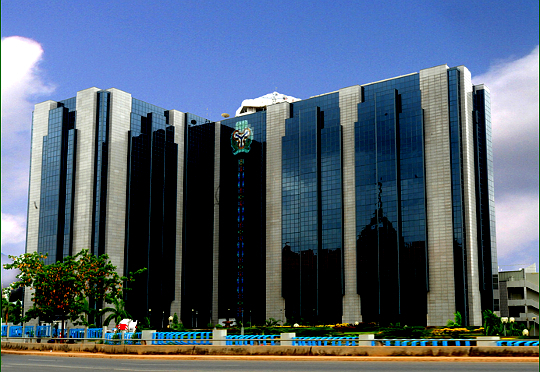
Nigerians abandon 30m bank accounts

The total number of inactive bank accounts in Nigeria stand at 30.26 million despite efforts by banks to retain old customers and attract new ones.

The accounts, activated by commercial banks for new holders but later abandoned to dormancy by the customers now constitute 32.42 per cent of the total 94.388 million activated bank accounts in the country.

Consequently, only 64.128 million accounts that represent 68.7 per cent of the total activated accounts domiciled in commercial banks are functional.

According to the latest industry statistics obtained by Daily Trust from the Nigerian Inter-Bank Settlement System (NIBSS) Plc over the weekend, the growing wave of new, active and dormant accounts across savings and currents account types in the country has been progressively steady.

Giving the year-to-date (YTD) analysis of the latest report up till October this year, NIBSS indicated that a total of 4.13 million accounts have become dormant within the period, jacking up dormant account base to the current figure from 26.042 million it stood at the end Q4, 2015.

NIBSS further stated that from a figure of 85.018 million accounts in December 2105, total account base in the country has grown by 11.02 per cent as 9.37 million new accounts were activated within the period.

In its breakdown, 30.063 million, 2.896 million and 2.365 million new accounts came on board in Q1, Q2 and Q3 2016 respectively, while in October, the figure maintained the upward momentum by 1.12 per cent as 1.046 million new accounts were recorded in the month alone.

Meanwhile, further analysis data revealed savings accounts as constituting the largest chunk of the total activated bank accounts as it stood at 66.255 million while current accounts are just 25.58 million.

Experts have also warned that Nigerians, who make use of dormant bank accounts, should not throw caution to the wind as the account might generate debt.

A customer, who preferred not to be named, recounted her ordeal with one of Nigeria’s leading banks, saying “My dormant bank account generated a debt which kept growing overtime, so, one must be careful.”

According to Investopedia, a dormant account has had no activity for a long period of time, other than posting interest and a statute of limitations usually does not apply to it, so funds can be claimed by the owner or beneficiary at any time.

However, it will be recalled that until a new dormant account management policy was released by the Central Bank of Nigeria (CBN) late in 2015, commercial banks in Nigeria have always converted customers’ money in dormant accounts from liabilities to income of the banks. While the apex bank put an end to this standard by also directing banks to reverse such conversion of customers’ money made five years before the 2015 policy which was in favour of account holders, analysts said this must have also contributed to the growing rate of dormant accounts.

ARSENAL LOOK TO LLORENTE

According to the Daily Star a report in Don Balon has reported on interest in the midfielder whose father, great uncle and grandfather have all played for Real.
Arsenal have extensive scouting links throughout Spain and have been impressed by the reports coming in about Llorente who is currently on loan at Deportivo Alaves.
No fee is mentioned in the story but the examples of Cesc Fabregas and Victor Bellerin are bound to be put to the 21-year-old.
With his family ties leaving Madrid would be a big decision but at the age of 21 and still to make the breakthrough at his parent club the option of working with Arsene Wenger is bound to appeal.
If the move for Llorente is successful it will cast further doubt over the Arsenal future of Jack Wilshere who had to go out on loan to Bournemouth this season in order to get a run of matches.

Donald Trump to retain high-profile Indian American prosecutor appointed by Obama

New York: US President-elect Donald Trump is going to keep Indian American Preet Bharara in his job as a high-profile federal prosecutor with charge of Wall Street and important security matters in New York.
Bharara, who was appointed by President Barack Obama, told reporters after meeting with the president-elect on Wednesday that Trump asked him to continue as the US District Attorney for Southern New York and "I agreed to stay on."
Bharara has the reputation of being a crusader against financial institutions that have been blamed for the recent great recession and have been attacked by Trump for causing economic hardship around the nation.
He has taken action against major banks like Citibank and JP Morgan Chase, forcing them to pay billions of dollars to the government to settle the cases.
He has prosecuted over 100 of Wall Street executives for criminal activities like stock trading irregularities using insider information.
They include several Indians like Rajat Gupta, the former head of the consulting company McKinsey and Goldman Sachs director, who served two years in jail for colluding with the Sri Lankan American hedge fund operator Raj Rajaratnam in a stock market scam.
The meeting with Trump and the offer to have Bharara is unusual both because he is a Democrat and an Obama appointee — the only one so far that the Republican has said he will keep on - and because despite its visibility, the job is not of the high-level that Trump is currently trying to fill.
Therefore, it shows the importance Trump attaches to the areas of potential prosecution that Bharara oversees.
Like Bharara, Trump is highly critical of Wall Street manipulations and irregularities, saying: "Wall Street has caused tremendous problems for us."
"I'm not going to let Wall Street get away with murder," Trump has declared, and Bharara would be his minion to ensure that.
Bharara has prosecuted several New York politicians for corruption. The senior-most among them is state assembly Speaker Sheldon Silver, a Democrat, who was given a 12-year sentence for corruption.
Bharara, whose full name is Preetinder Preet Singh Bharara, was born in Ferozepore in 1968 and immigrated to the US as a child.
He sparked a diplomatic stand-off between India and the United States in 2013 when he had a Dalit Indian diplomat, Devyani Khobragade, arrested and strip-searched over allegations that she had made a false statement in the visa application for her maid.
Other diplomats accused of similar offenses were not similarly treated by Bharara and the humiliating action against Khobragade, the Deputy Consul General in New York, brought retaliatory action against by India against US diplomats in India.
Secretary of State John Kerry expressed regret for the incident and the matter was diplomatically resolved with her being allowed to leave the US without prosecution.
Citibank paid a $158 million fine to settle a case Bharara brought against it for misleading the government about loans and in another case made a $7 billion payment to the government after Bharara began investigating its Mexican unit.
JP Morgan Chase was made to forfeit $7 billion for failing to inform authorities about a massive investment fraud by a client.

Deal-Maker Trump Will Feel at Home With Eastern Europe

Since Donald Trump won the US election, there has been anxiety over what the tycoon’s victory means for eastern Europe. Will Ukraine be the big loser as the American president tries to cut a deal with Vladimir Putin over Syria? Can we expect a fresh round of Russian-inspired hybrid war in eastern Ukraine or even more Russian military incursions elsewhere in the region?
A new military scenario looks unlikely, if only because Mr Putin is desperate to see western sanctions on his country lifted. But the concern masks a more urgent problem.
Even before Mr Trump won the White House, much of eastern Europe was living in Trumpland, where business and politics are fused and politics is more about making deals than building institutions.
The sight of a billionaire businessman capturing power is familiar to the citizens of Ukraine, Moldova and Georgia. Each is run, formally or informally, by a wealthy tycoon. Bidzina Ivanishvili, the former prime minister and the godfather of the ruling party Georgian Dream, is estimated to be worth about $5bn, more than one-third of Georgia’s gross domestic product.
Vladimir Plahotniuc, Moldova’s richest man, is also its de facto leader, while Petro Poroshenko, Ukraine’s president, is one of the wealthiest men in his country.
For years, Moldova was known as eastern Europe’s “champion of reform”. It was granted visa-free travel and an association agreement with the EU before any of its neighbours. Yet on November 13 Moldova apparently rejected Europe by electing Igor Dodon, a pro-Russian socialist, to the post of president, a position with limited constitutional powers but symbolic importance.
The reason for this protest vote is systemic corruption which the EU and US failed to check and which culminated in the revelation in 2015 that $1bn, equivalent to one-sixth of Moldova’s GDP, had been siphoned from three banks, with the alleged connivance of top officials.
Iurie Leanca, Moldova’s then head of government, responded to the scandal by saying that he was “just a prime minister”. That is because real power in Moldova lies with Mr Plahotniuc.
Even if Moldova does not tilt back geopolitically towards Moscow, it risks a situation just as bad — being an unreformed grey zone on the margins of Europe. Ukraine presents a similar challenge but on a much bigger scale.
Mr Poroshenko has instigated more reforms in two years than his predecessors did in 20, overhauling the police force, the energy sector and the public procurement system. But he also displays a firm resolve not to reform any institutions that could threaten him personally.
Opinion polls routinely show that corruption has eroded the trust of Ukrainians in their leaders. Recent asset declarations by officials — with the prime minister declaring no fewer than 12 luxury watches — only reinforce this weary cynicism, which could empower populist or pro-Russian parties at the next election.
None of this will be shocking to Mr Trump, who already likes doing business in this part of the world. A Trump presidency that prioritises dealmaking with oligarch-politicians over the fight against corruption, locally and internationally, is bad news for the citizens of eastern Europe, and for Europe as a whole.
In Ukraine, where Joe Biden, US vice-president, has practised “tough love” on the government, the effects could be especially deleterious, as Mr Biden’s departure and the advent of Mr Trump will weaken the moral authority of the US.
That will leave the EU struggling to push for reform of a region that should be more afraid of dodgy banks than Russian tanks.